



Paver Patios in Charlotte, NC: A Homeowner’s Guide
If you’re dreaming of a backyard you actually use — somewhere to dine, relax, and gather — it almost always starts with one thing: a patio. And when it comes to building one that looks great and lasts, pavers are hard to beat. Here’s what every Charlotte-area homeowner should know before building a paver patio.
Why pavers beat poured concrete
A plain concrete slab is the default, but pavers outperform it in nearly every way that matters:
- They resist cracking. Individual pavers flex with the ground as it shifts and settles — a real benefit in Charlotte’s clay-heavy soil — while a solid concrete slab is prone to cracking over time.
- They’re easy to repair. If a paver is ever stained or damaged, you lift and replace that one piece. A cracked slab means patching or redoing the whole thing.
- They look far better. Pavers come in a huge range of colors, shapes, and patterns, giving you a custom, high-end look that stamped concrete only imitates.
- They’re ready right away. No long curing time, and the interlocking surface provides good traction underfoot.
Material and style options
One of the best things about a paver patio is how customizable it is. A few of the choices we help homeowners make:
- Concrete pavers — the most popular and versatile, available in countless colors, shapes, and finishes, including options that convincingly mimic natural stone or wood plank.
- Natural stone — travertine, flagstone, and bluestone for a premium, timeless look.
- Brick — a classic, traditional look that pairs beautifully with many Charlotte homes.
- Patterns and borders — herringbone, running bond, and more, often with a contrasting border to frame the space and add polish.
The right choice depends on your home’s style, how you’ll use the space, and the look you’re after — something we work through together during design.
Design ideas to get the most from your patio
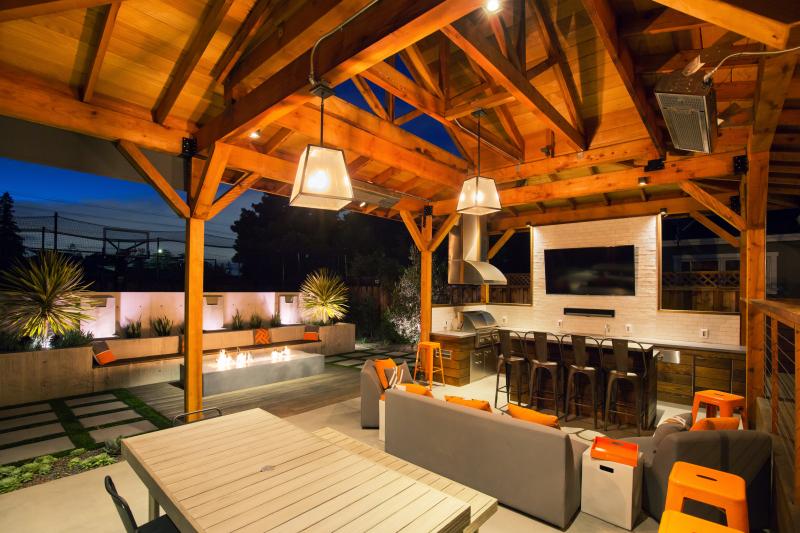
A patio is the foundation, but the features around it are what make it a destination. Popular additions:
- A fire pit or outdoor fireplace to anchor the space and extend your season into the cooler months.
- Seating walls that provide built-in seating and define the patio’s edges.
- An outdoor kitchen or built-in grill for effortless entertaining.
- Landscape and patio lighting — step lights, wall lights, and bistro strands — so the space is safe and inviting after dark. Thoughtful outdoor lighting is what makes a patio usable every evening, not just in daylight.
Planning these together from the start means the wiring, layout, and features all work as one cohesive space.

What makes a paver patio last
A beautiful patio is as much about what’s underneath as what you see. Proper installation — a well-prepared and compacted base, correct slope for drainage, quality pavers, and joint sand to lock everything in place — is what separates a patio that stays level and crisp for decades from one that shifts, sinks, or weeds up within a few years. It’s the part you can’t see, and it’s exactly where professional installation earns its keep.
Low-maintenance by design
Paver patios are refreshingly easy to live with. An occasional sweep and rinse keeps them looking great, joint sand can be refreshed as needed over the years, and sealing is an option to deepen color and add stain resistance. Compared to the upkeep of a wood deck, a paver patio is a low-maintenance, long-term investment.
Build your patio with Charlotte Lighting & Hardscapes
Whether you want a simple, elegant patio or a complete outdoor living space with a fireplace, seating walls, and lighting, we design and build it in-house — so the result looks intentional and lasts. We’ll walk your property, talk through how you want to use the space, and create a plan that fits your home and budget.
We proudly serve Charlotte, Waxhaw, Fort Mill, Lake Wylie, Matthews, Tega Cay, Rock Hill, and the surrounding communities. Call or text (980) 226-7481 or request your free consultation to get started.
Frequently asked questions
Are pavers better than a concrete patio? For most homeowners, yes. Pavers resist cracking because they flex with the ground, they’re easy to repair one piece at a time, and they offer far more design options than a poured or stamped slab.
How long does a paver patio last? With proper installation and minimal upkeep, a quality paver patio can last for decades. The key is a well-prepared base and correct drainage — the work beneath the surface.
Do paver patios require a lot of maintenance? Very little. An occasional sweep and rinse keeps them looking great, and joint sand can be refreshed over time. Sealing is optional for added color and stain protection.
What’s the best time of year to build a patio in Charlotte? Our mild climate allows patio work nearly year-round. Fall and winter are often great times to build, with more crew availability and your space ready to enjoy by spring.
Can I add a fire pit or lighting to my patio later? Yes, though it’s easiest to plan them from the start so wiring and layout are coordinated. Features like fire pits, seating walls, and lighting can also be added to an existing patio.


Leave a Reply
Want to join the discussion?Feel free to contribute!